Custom software that pays for itself in saved hours.
This page is for the companies with crews, shops, and job numbers — contractors, fabricators, HVAC and mechanical companies, distributors, and manufacturers. Every tool below started as a real headache in a real Maine business of that kind.
If your team fights spreadsheets, paper forms, or typing the same thing twice, there is usually a project here. Department dashboards start at $5,000 and are typically delivered in three weeks; larger systems receive their own fixed scope and schedule. You own everything when it is done.
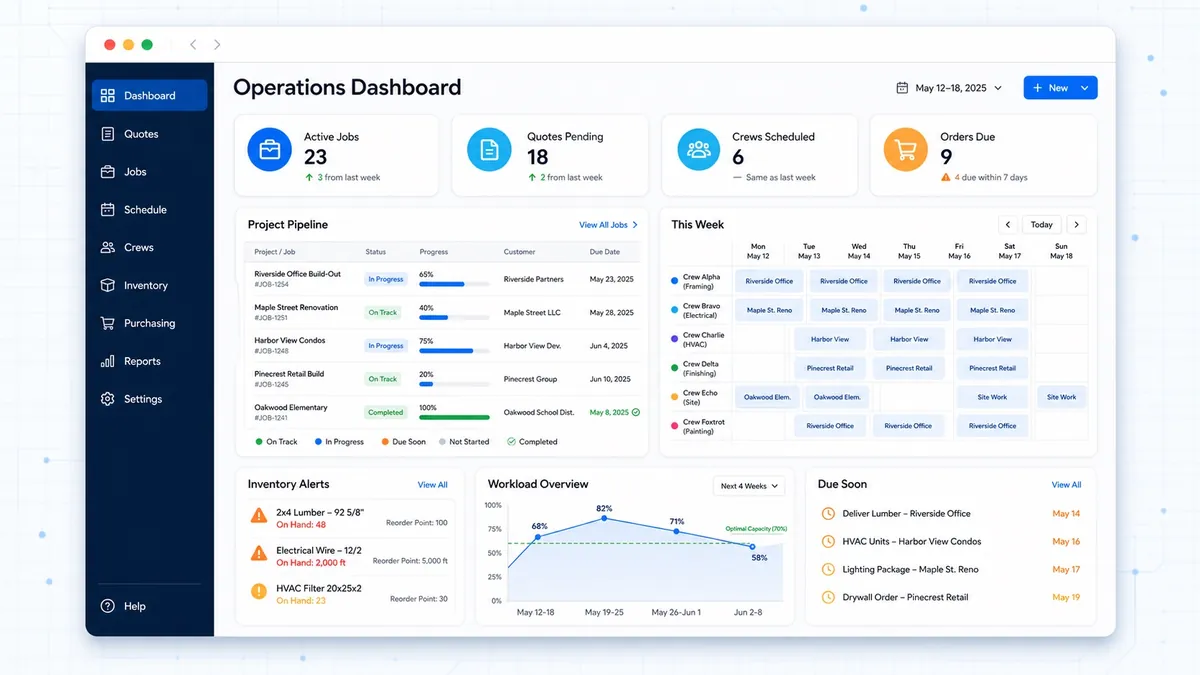
The seven things shops and crews ask for most
Each of these is a normal department project. Pick the one costing your team the most time and start there.
Quoting & Estimating
Customers, pricing, revisions, approvals, and follow-up in one workspace instead of folders and old emails.
- One shared price list every quote is built from
- Revision history, so what changed is never in doubt
- A view of what is drafted, sent, and gone quiet
Inventory & Purchasing
Know what is in stock before a crew needs it. Counts, orders, vendors, and receiving in one place instead of five spreadsheets.
- Low stock flagged before anyone runs out
- Orders followed from entry to delivery
- Deliveries checked in against the right order
Crew Scheduling & Daily Planning
Phone-friendly tools that tell crews where to be and what they need, and show you the whole week at a glance.
- Today’s plan on a phone, no app store needed
- The full week visible to whoever builds the schedule
- Changes reach the crew without a phone tree
Job & Team Dashboards
Your whole operation on one screen: who is on what, what is due, and where the bottleneck is, without calling five people.
- Live job status anyone can look up
- Workload across your people, so you see who is buried
- A full-screen view for a TV on the wall
Paperwork & Data Entry
Stop entering the same information in three places. Forms feed the systems you already use, once.
- One entry point instead of three
- Recurring forms filled from what you already know
- Records filed against the right job automatically
Reporting & Visibility
The weekly numbers built automatically instead of by hand. Managers see current figures on a schedule.
- Reports that arrive without anyone building them
- Trends over time, not just this week’s snapshot
- The same numbers for everyone, from one source
Spreadsheet Replacement
The workbook three people keep separate copies of, turned into one shared system with your history brought across.
- Your existing data imported, not retyped
- One version everyone works from
- The parts that worked, kept
Who this is built for
Southern Maine companies with crews, shops, or job numbers. Usually 15 to 150 people, old enough to have real process and too small to have an IT department.
Run an office? See professional services → · Own and run the place? See owner-operated businesses →
When custom software is the right call — and when it isn’t
Off-the-shelf software is often the better answer. Here is how I tell the difference, and I will tell you the same thing on a call.
Build something custom when
- Your process is genuinely particular to how you work
- Off-the-shelf software would force you to change to fit it
- The spreadsheet works, but only one person can run it
- You want to own it outright instead of renting it forever
Buy off the shelf when
- The job is standard: accounting, payroll, email, storage
- A mature product already does exactly what you need
- The real problem is a process one, not a software one
- Nobody on your team is willing to change how they work
Not sure which one you need? Tell me the task your team repeats every week and you’ll get an honest read on whether software can fix it, and what it would take. No cost and no obligation.
Book a free 30-minute consult